- Why olive oil polyphenols are important for heart health
- What the study measured and how the research was conducted
- The main findings after four weeks of consumption
- What these results mean for everyday olive oil choices
Not all extra virgin olive oils are the same, especially when it comes to polyphenols. A new randomized clinical trial published in the journal Nutrients suggests that a high-phenolic extra virgin olive oil (EVOO), even when consumed in a smaller daily amount, may improve key lipid markers in people with hyperlipidemia.
Why polyphenols matter
Extra virgin olive oil naturally contains compounds called polyphenols. These substances contribute to the oil’s characteristic bitterness and pungency, and they are widely studied for their antioxidant and anti-inflammatory properties.
From a health perspective, polyphenols such as hydroxytyrosol and tyrosol have been associated with cardiovascular protection. The study discussed here focuses on how the concentration of these compounds in EVOO may influence health outcomes, not just olive oil consumption in general.
Source: Kourek et al., 2025 – Nutrients
The study at a glance
This was a single-blind, randomized clinical trial designed to compare the effects of extra virgin olive oils with different phenolic concentrations on lipid markers related to cardiovascular health.
- Type of study: Randomized clinical trial
- Participants: 50 patients with hyperlipidemia and 20 healthy controls
- Duration: 4 weeks
- Oils tested: Two EVOOs with different phenolic concentrations
- Main objective: Assess changes in lipid profile and related markers
Participants with hyperlipidemia were randomly assigned to one of two EVOO groups:
- Lower-phenolic EVOO: 414 mg/kg total phenols, consumed at 20 g per day
- Higher-phenolic EVOO: 1,021 mg/kg total phenols, consumed at 8 g per day
Importantly, both groups consumed approximately the same total amount of polyphenols per day (around 8.3 mg). This allowed researchers to evaluate whether phenolic concentration and dosage played a role in the outcomes.
What did the researchers measure?
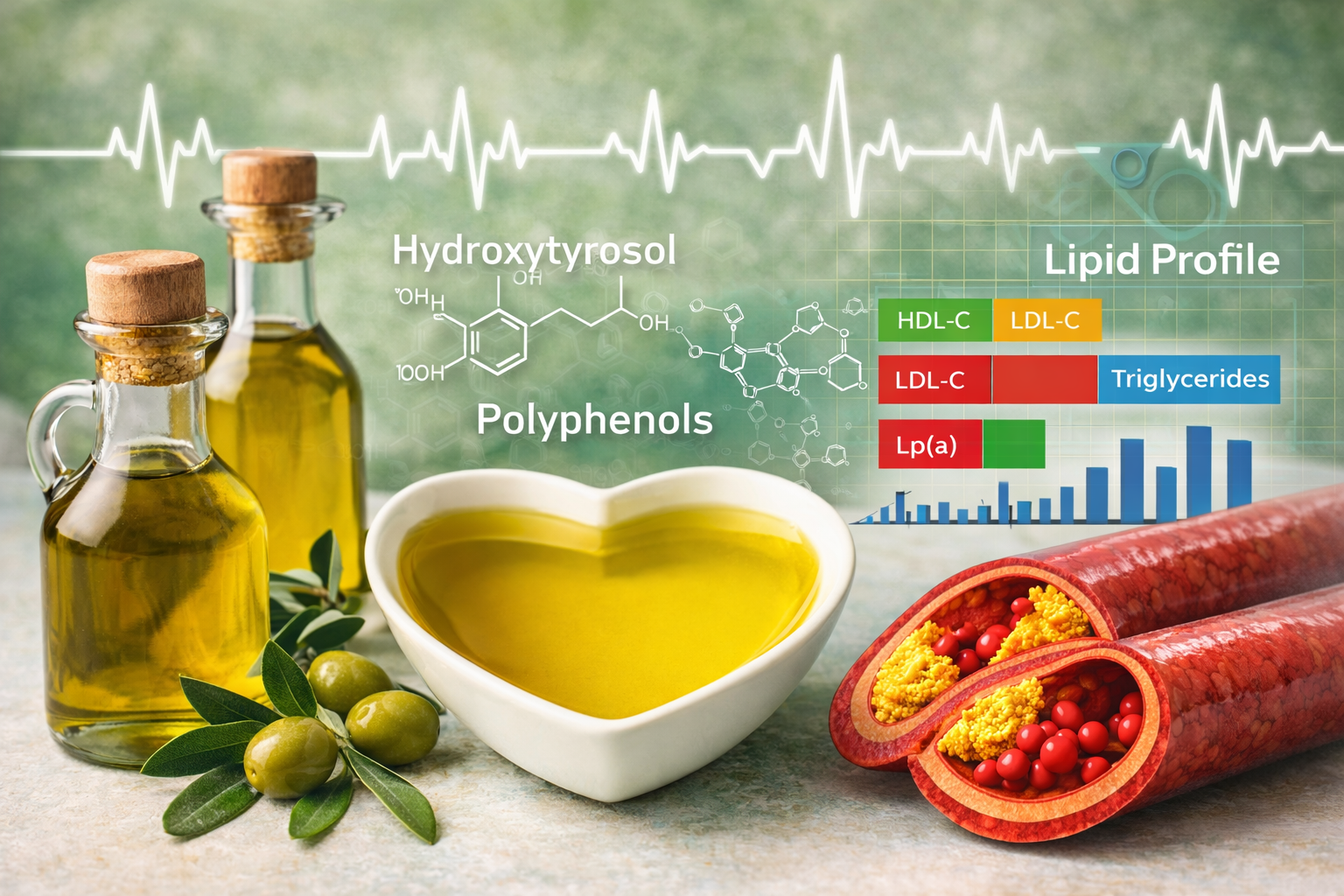
The study assessed several well-known and emerging lipid markers before and after the 4-week intervention:
- Total cholesterol
- LDL cholesterol
- HDL cholesterol
- Triglycerides
- Lipoprotein(a), or Lp(a)
- Apolipoprotein A1 and Apolipoprotein B
These markers are commonly used to evaluate cardiovascular risk and lipid metabolism.
The main findings after four weeks
1. Better total cholesterol results with high-phenolic EVOO
The group consuming the higher-phenolic EVOO at a lower daily dose showed a significantly more favorable change in total cholesterol compared with the lower-phenolic, higher-dose group (p = 0.045). This suggests that phenolic concentration may be more important than the total quantity of oil consumed.
2. HDL increased and Lp(a) decreased in hyperlipidemic patients
When compared with healthy controls, patients with hyperlipidemia who consumed EVOO experienced a significant increase in HDL cholesterol (p < 0.001) and a reduction in lipoprotein(a) levels (p = 0.040). Lp(a) is considered an independent risk factor for atherosclerosis.
Key takeaway: In this clinical trial, a smaller daily amount of high-phenolic extra virgin olive oil appeared to be more effective at improving certain lipid markers than a larger amount of lower-phenolic EVOO.
What this means for everyday olive oil choices
For consumers who already have some familiarity with olive oil, these findings reinforce a well-known idea: sensory intensity often reflects phenolic richness. Bitterness and pungency are not flaws, they are indicators of bioactive compounds.
The study suggests that choosing an EVOO with a higher phenolic concentration may offer greater cardiovascular benefits, even when consumed in modest quantities.
Practical takeaways:
- Choose fresh extra virgin olive oil and pay attention to harvest date
- If available, look for oils that indicate total phenolic content (mg/kg)
- Use sensory cues: bitterness and a peppery sensation are often linked to higher phenols
- Daily intake does not need to be excessive—around half a tablespoon was used in the high-phenolic group