- What olive tree flowering is and why it marks the beginning of the next harvest
- When flowering occurs in Mediterranean climates and how long it lasts
- How wind pollination and cross-pollination influence fruit set
- Why this critical stage determines the quantity and quality of olive oil production
Olive oil quality is shaped long before the olives are harvested. One of the most decisive – yet often overlooked – stages in the olive oil production cycle is the flowering of the olive tree.
This delicate phase not only marks the beginning of a new agricultural season, but also determines the potential yield and overall quality of the future harvest. To truly understand what makes a great olive oil, it’s essential to first understand what happens during flowering.
What is olive oil flowering?
Flowering is the stage in the olive tree’s annual cycle during which it produces flowers that, once fertilized, will develop into olives.
It marks the beginning of the next harvest and is one of the most critical moments for determining both the quantity and quality of the fruit that will eventually be produced.
When Does It Occur?
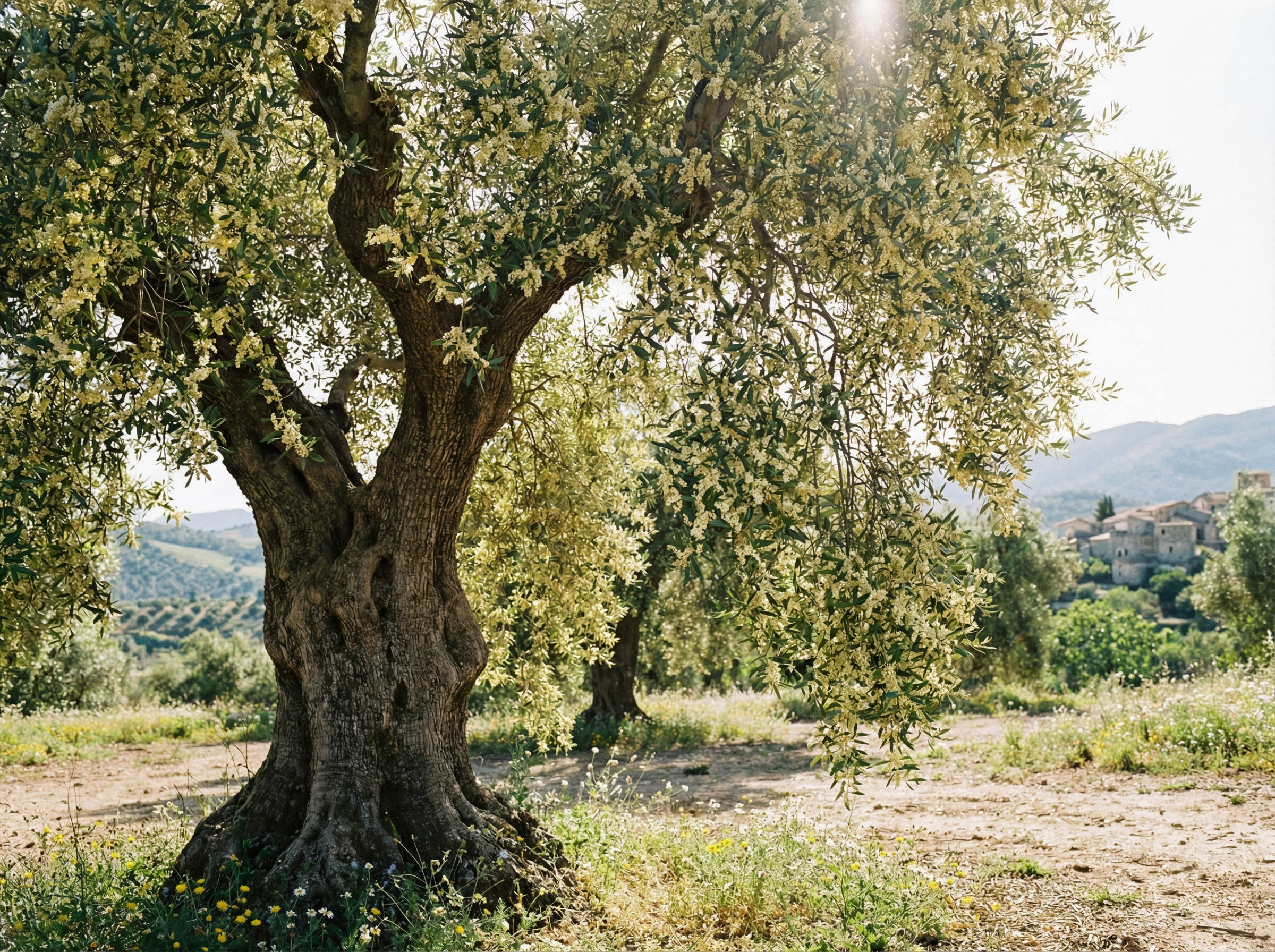
In Mediterranean climates such as Spain, olive tree flowering typically takes place between late April and early June.
The duration of the process usually spans a few weeks, depending on climate conditions and the olive variety.
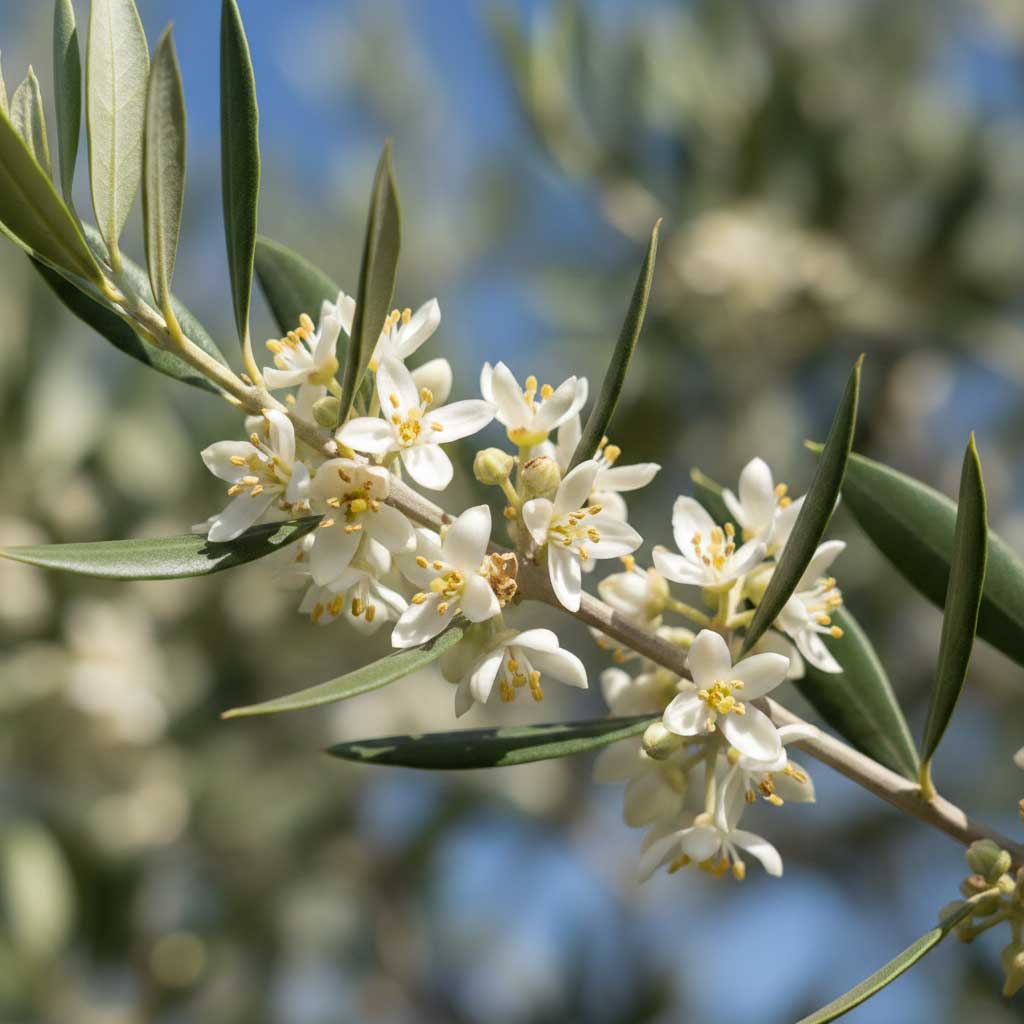
During this period, the olive tree develops clusters of small white flowers (inflorescences). Each cluster may contain dozens of tiny flowers. However, only a very small percentage (approximately 1-2%) will eventually become olives.
Pollination: How Flowers Become Fertilized
Olive flowers are primarily pollinated by the wind (anemophilous pollination), rather than by insects as in many other fruit trees.
Pollen is carried through the air from one flower to another. Many olive varieties require cross-pollination from a different tree to achieve effective fertilization due to genetic self-incompatibility.
This means that the presence of compatible varieties nearby can significantly influence fruit set.
Why Is This Stage So Important?
Flowering directly determines the potential size and quality of the upcoming harvest.
Several factors influence this phase:
- Number of flowers produced: more flowers increase the potential for fruit formation.
- Weather conditions during flowering: excessive heat, late frosts, strong winds or rain can negatively affect pollination and fruit set.
- Successful fertilization: only properly fertilized flowers will develop into olives.
For this reason, flowering is considered one of the most critical phenological stages in the olive tree’s life cycle.
Find the best Spanish extra virgin premium olive oils online at Spanish-oil . And buy the olive oils directly from Spain, we offer Worldwide shipping!